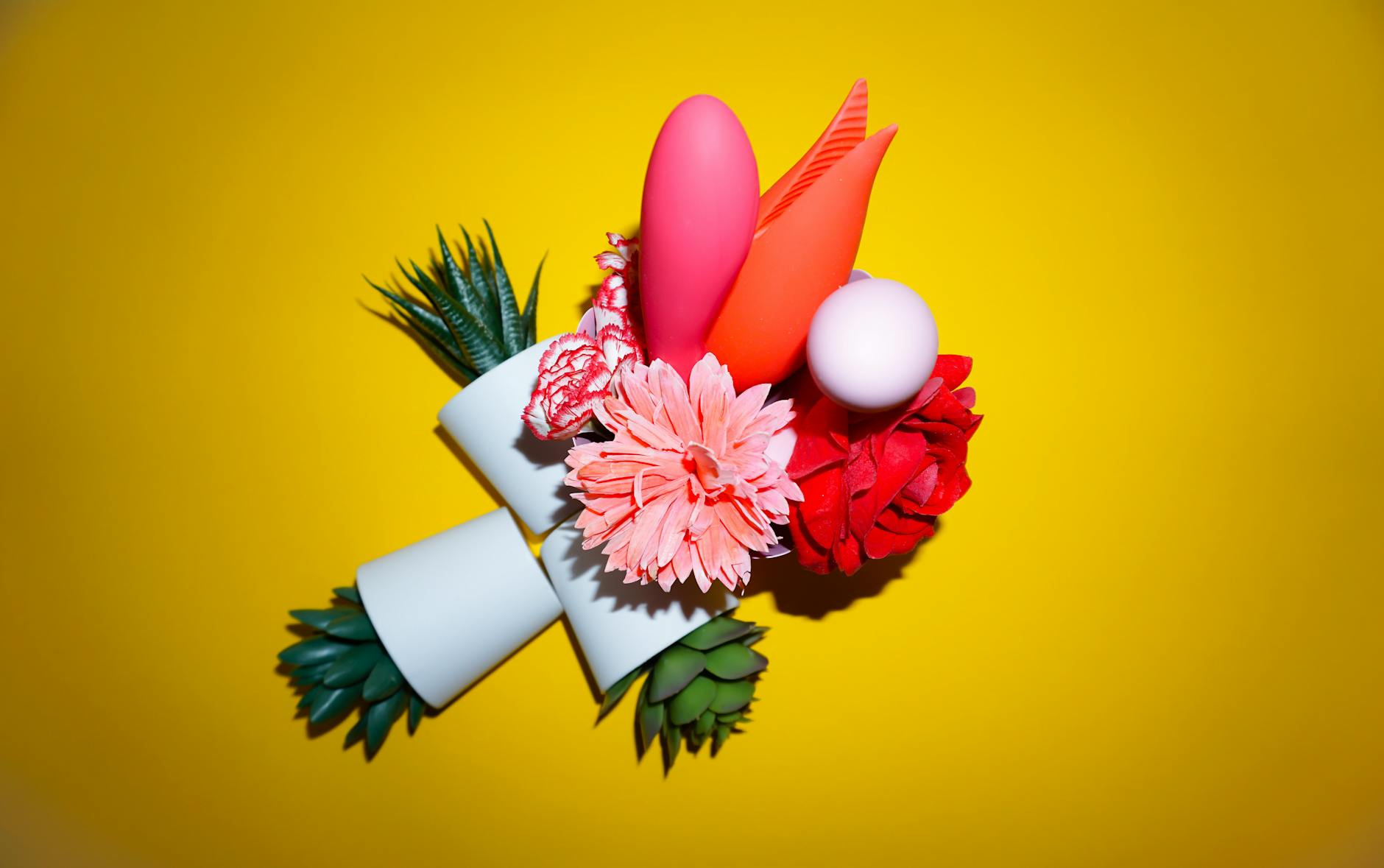
Why Lemon Vibrators Take Longer to Work After 40
Honestly, if you're noticing that your lemon vibrator (or any clitoral vibrator) takes longer to deliver orgasm after you've hit 40, you're not imagining it. And it's not because the toy got worse or you lost your touch.
Something real is happening in your body. The good news? Once you understand what it is, the fixes are straightforward.
The biological shift nobody talks about
Arousal has two speeds in your twenties and thirties: fast and slow. After 40, that accelerator starts losing sensitivity. Here's the actual mechanism.
Estrogen levels begin to decline in your late thirties, and that decline accelerates into perimenopause (which can start anywhere from age 35 to 45). Estrogen does a lot of quiet work in the background. It keeps the tissues in your vulva thick and vascular. It helps blood rush to the clitoris when you're aroused. It influences the neurochemistry of desire itself.
When estrogen drops, blood flow to the clitoris becomes slower. Your clitoris is less engorged when you're excited. This means the nerve endings, while still perfectly intact and capable of orgasm, require more sustained stimulation to reach that threshold.
At the same time, testosterone (yes, people with vulvas produce testosterone) also declines. Testosterone isn't just about desire. It's about responsive pleasure. Lower testosterone means arousal takes longer to build, and the intensity of sensation can feel muted even when stimulation is happening.
This is why your favorite lemon clitoral vibrator might feel less immediately effective. The vibrations are the same. Your capacity for pleasure is unchanged. Your body's responsiveness is just slower to ignite.
Why warm-up time matters more now
When arousal was faster, you could skip straight to focused clitoral stimulation. A few minutes on high with your lemon vibrator, and you were done.
After 40, that shortcut doesn't work the same way. Your body needs what I call a "full arousal sequence" instead of a sprint.
This means starting without the vibrator. Spend 10 to 15 minutes on non-goal-oriented touch. That's kissing, caressing other parts of your body, mental focus on things that turn you on. Let your cardiovascular system start working. Let your body's natural lubrication increase. Let your clitoris start becoming engorged on its own.
Only then introduce your lemon vibrator on a lower setting. This isn't a step backward. It's you working with your biology instead of against it.
Many of my clients report that this longer buildup actually makes the orgasm more intense once it arrives. When your whole body has been engaged for 20 minutes instead of 3, the payoff is different.
The pattern-switching secret
If you're used to a single vibration setting, try switching patterns before you reach climax. Most lemon vibrators (including the Lem) have multiple patterns.
What happens is this: your nerves adapt to constant stimulation. The same pattern that felt incredible in minute two feels merely pleasant by minute five. Your body is still aroused, but the novelty is gone.
Switch to a different pattern every 3 to 5 minutes. Go from steady buzz to pulse to ramp. Your nervous system re-engages. You reset the sensation. This often cuts down the time needed to reach orgasm by half.
It's not a hack. It's neurology. Your sensory nerves are designed to notice change. Give them change, and they wake back up.
Lubrication becomes non-negotiable
After 40, natural lubrication often decreases. This is partly estrogen, partly hormonal IUDs, partly just individual variation. It's not a sign something is wrong. It's normal.
But here's the thing: reduced lubrication changes how your lemon vibrator feels. The friction is higher. The sensation can feel less like pleasure and more like effort. This can actually slow down arousal because your body is protecting itself from discomfort.
Water-based lubricant isn't extra. It's part of the equation now. Apply it before you start warm-up, reapply if things feel dry. This single addition often brings the time to orgasm down significantly because you're removing friction resistance.
The Lem works beautifully with lube. The suction mechanism combined with adequate lubrication creates consistent, intense stimulation without the rawness that friction vibrators can create.
Mental load got heavier too
Arousal is partly physiological and partly neurological. After 40, the mental load often increases.
You've got more life happening. More stress. Work pressures intensify. Relationships shift. If you have a partner, you might be managing their pleasure, their schedule, their needs alongside your own. You might be managing aging parents. Your own body feels less familiar.
All of this is in the background noise of your brain when you're trying to get aroused. Your body can be physically stimulated while your mind is three steps ahead solving tomorrow's problem.
This is why, oddly enough, longer sessions actually work better. The extended warm-up and play give your mind permission to shut off. You're not sprinting to an orgasm. You're settling into 30 minutes of sensation. Somehow that makes it easier for your brain to let go.
A lemon sucker like the Lem is particularly good for this because it requires less active engagement from you. It does the work. Your job is to relax and feel. That cognitive shift alone can make the difference.
When to check in with a professional
If you're taking longer to orgasm but you still reach orgasm with focus, you're fine. That's normal physiology.
If orgasm is becoming impossible or extremely painful, that's worth discussing with a menopause-informed GP. Genitourinary syndrome of menopause is treatable. Topical estrogen cream changes things remarkably quickly.
If you're also experiencing hot flashes, mood changes, or irregular periods, you might be in perimenopause, and talking to someone who specializes in midlife transitions is actually useful. Not because something is broken, but because the right information and sometimes the right support makes this decade feel like your own again.
Consider reading more about how lemon vibrators feel different with partners versus solo use, since arousal patterns shift in partnered contexts too.
The pattern switcher approach
If you haven't tried this already: try one lemon vibrator session where your only job is exploration. Don't aim for orgasm. Test every pattern. Notice which ones feel best, when. Notice what your body responds to.
Then in your next session, build your entire experience around those findings. Lead with the patterns that worked. Switch patterns intentionally. Use them as your accelerators instead of trying to force one pattern to do all the work.
You're not broken. Your toy isn't broken. You're just operating with a different set of variables, and once you know what they are, pleasure becomes easier again.
The broader picture
After 40, arousal takes longer, orgasms may feel different, and your body needs different conditions to feel good. This is not loss. It's recalibration.
Many people report that the quality of their pleasure actually improves in this phase. The orgasms are deeper. The satisfaction is more complete. The experience is less performance-focused because the old urgency has lifted.
Your lemon clitoral vibrator is still an excellent tool. You're just using it in a different context now. That context, once you adjust to it, often becomes your favorite era of your sexual life.
Frequently asked questions
Why do lemon vibrators feel less intense after 40?
Decreased estrogen and testosterone mean blood flow to the clitoris is slower and less robust. The nerve endings are unchanged, but they're receiving less engorged tissue to work with. This doesn't reduce your capacity for orgasm, but it does mean arousal takes longer. Warming up longer, using lubricant, and trying pattern switching all restore intensity effectively.
Can I use my lemon vibrator on a higher setting to compensate for slower arousal?
Technically yes, but it's not the best strategy. Higher intensity can feel raw or overwhelming on tissue that's less engorged. Instead, work with lower settings and longer warm-up time. You'll reach orgasm faster with proper preparation than with brute force intensity.
Does perimenopause affect how clitoral vibrators work?
Absolutely. Perimenopause and menopause bring the same hormonal shifts. If you're experiencing irregular periods, hot flashes, or mood changes alongside longer arousal times, you're likely in perimenopause. The fixes are the same: warm-up time, lubrication, pattern switching, and considering topical estrogen if things feel uncomfortable.
Is it normal to need more lube after 40?
Completely normal. Estrogen keeps tissue naturally lubricated. As estrogen declines, natural lubrication often decreases. This isn't a sign something is wrong. It's physiology. Water-based lube becomes a regular part of the setup, not an emergency fix.
How long should warm-up take now?
Aim for 10 to 20 minutes of non-goal-oriented touch and arousal before introducing your lemon vibrator. This isn't wasted time. It's preparation. Your nervous system needs this runway to get your body fully responsive. Once the vibrator arrives, you'll reach climax faster than if you'd skipped straight to it.
Should I switch to a different toy after 40?
Not necessarily. Your existing lemon vibrator is still excellent. What changes is how you use it: more warm-up, different patterns, added lubrication. These tweaks often make it feel brand new. If you're curious about options, air-pulse toys like the Lem tend to work beautifully across this life phase because they don't rely on friction.
The bottom line
Your body changed. That's not a failure. That's just time doing its job. Once you know what shifted and why, the fixes are simple, effective, and often make pleasure feel deeper than before.