
Let's be honest about first-time jitters
The moment you consider buying a vibrator, something shifts. A tiny voice says: Am I weird? Is this too much? Will my partner judge me? Will I look silly? These aren't questions. They're friction. And that friction makes it genuinely hard to take the first step.
Here's what I see in my practice: the anxiety isn't about pleasure itself. It's about permission. It's about whether your own body feels safe exploring something new. Most people who've never tried adult toys aren't nervous about how they'll feel. They're nervous about who they'll become if they do.
Why lemon vibrators dismantle the pressure
Clitoral vibrators—especially the suction-based design of lemon vibrators like the Lem—work differently from what most people imagine. There's no penetration. There's no performance involved. There's no guessing whether something is "right." You point it, you turn it on, and your body either responds or it doesn't.
That simplicity is actually where the power lives.
When you're starting out, decision fatigue kills pleasure. Too many settings, too many vibration patterns, too much responsibility for the experience working out. The Lem gives you one job: find the pattern that feels good. That's it. No choreography. No pressure to orgasm. No wondering if you're "using it right."
I recommend lemon clitoral vibrators first because they're gentle entry points. The suction sensation feels less like a mechanical intrusion and more like a natural amplification of what your body already knows how to do. It's addition, not replacement.
The nervous system math
When you're anxious about something new, your nervous system is partially locked in a sympathetic state (fight-flight-freeze). That activation makes it harder for pleasure pathways to light up. Your body's literally not available.
Clitoral vibrators help reroute this. Instead of your brain spending energy on "Am I doing this right?" it gets to focus on sensation. Within 30 seconds of turning on a Lem, most people report their anxiety lifts. Not because the anxiety disappeared, but because sensation became louder than fear.
This is why partnered use often feels less stressful than solo use at first. Your partner isn't judging you. Your partner is present, and presence quiets the nervous system. If that's your entry point, that's perfectly valid.
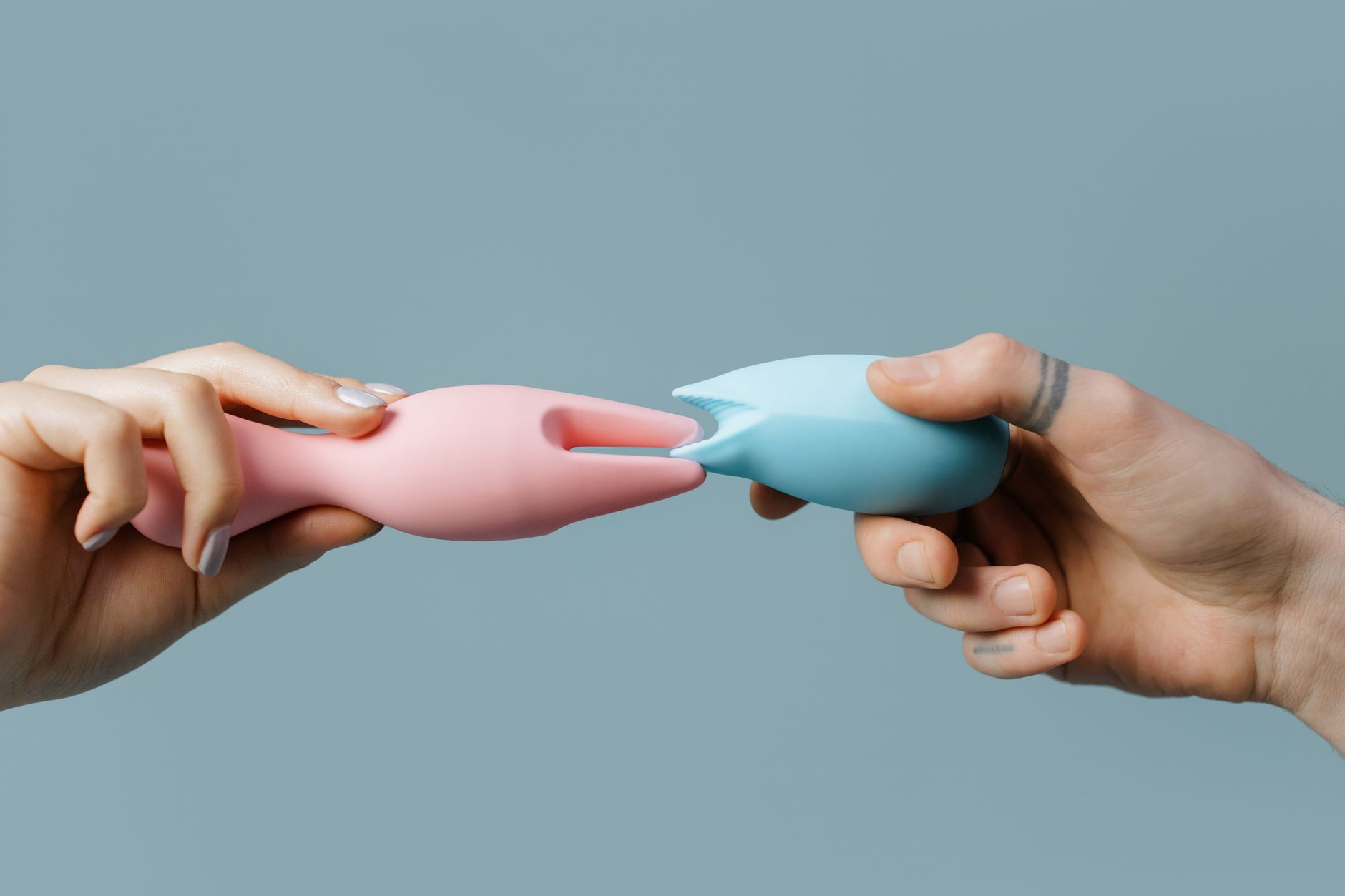
Photo by cottonbro studio on Pexels
What makes clitoral vibrators less intimidating than other options
Let me break down why people often skip straight past other adult toys and land on clitoral vibrators:
They're not penetrative. Penetration carries a whole different set of associations—vulnerability, depth, fullness. Clitoral vibrators let you explore pleasure without that layer. You're not working your way toward something. You're not building up to anything. You're just feeling.
They match your anatomy exactly. The clitoris has 8,000 nerve endings concentrated in a small area. A toy designed specifically for that zone feels obvious and natural, not makeshift. You're not repurposing something or adapting.
The experience is immediate. With lemon sexual toys, you turn it on and within seconds you know if it's working for you. There's no ramp-up period where you're wondering if you're doing something wrong. Instant feedback means instant confidence.
Solo use feels contained. Unlike toys that suggest partnered scenarios, clitoral vibrators work perfectly—often best—alone. No performance required. No audience. No one waiting for you to finish.
The first-time setup that actually works
If you're nervous about trying toys, here's what I recommend to clients:
Privacy that feels absolute. Not just physical privacy, but mental privacy. Close the door. Silence your phone. Set a timer so you know you have a bounded window. Nervous systems like boundaries. They signal safety.
Lube, always. Water-based lube makes everything feel smoother and more natural. It removes the friction (literally) that can make nervous people tense up. You're not forcing anything. You're facilitating ease.
Start on the lowest setting. If you have a lemon clitoral vibrator, begin on pattern one. Highest intensity is never the goal. Low, steady pressure is.
No performance metrics. You're not trying to orgasm. You're not trying to "do it right." You're collecting data on what sensation you like. That's the whole goal. Some sessions will feel amazing. Others will feel like nothing. Both are valuable information.
Stop whenever. Pleasure isn't a destination. You can explore for 45 seconds and stop. You can explore for 20 minutes and stop. There's no threshold you have to hit. This permission matters more than people realize.
The partner conversation (if there is one)
Many first-timers are in relationships and wondering: do I tell them? When? How?
Your partner not knowing doesn't make this wrong or unfaithful. Your partner knowing doesn't obligate them to participate. Those are separate conversations.
If you want to tell them, lead with what you're doing and why. "I'm going to explore some things I'm curious about. I want my own pleasure to feel less stressful." Not: "I need this because you're not doing something." Not: "I'm unhappy." Just: "I'm being intentional about my own body."
Some partners will want to participate. Others won't. Some will need time to process. All of those are fine. The key is that this is yours first. You're not auditioning your pleasure for their approval.
If you're curious about how to use clitoral vibrators when you want deeper connection with your partner, that's a separate conversation worth having. For now: this is about you.
Why anxiety often lifts after the first real attempt
Here's what almost always happens: you buy a lemon vibrator, set aside time, and actually use it. The experience itself demolishes the imaginary version.
Your brain built a story about this: awkward, uncomfortable, weird, risky. The reality is usually quiet, straightforward, and normal. The gap between the story and the reality is where the relief lives.
After the first time, the second time is easier. By the third time, you're not nervous anymore. You're just exploring. And by week two, the question isn't "Am I weird for doing this?" It's "How did I not know what my body actually liked?"
This is why I recommend not overthinking it. Anxiety loves planning. It loves rehearsal. The fastest way through the nervous-ness is simply to do the thing.
Addressing specific fears
"Will it feel weird?" Probably, for about 30 seconds. Then your brain normalizes it. Weirdness is just newness.
"What if nothing happens?" That's fine. Some bodies need more time, more relaxation, or different stimulation. The Lem works for most people, but "most" isn't everyone. If it doesn't click after three tries, you've learned something valuable.
"What if I like it too much?" Great. That's the goal. You deserve pleasure that feels good.
"What if my body rejects the idea?" Listen to it. If you're genuinely not ready, you're not ready. Forcing it defeats the purpose. Readiness will come when the nervous system feels safer.
Why clitoral vibrators beat other entry points
Compare this to penetrative toys: more complex, more intimidating, more assumptions baked in about what you want. Compare it to wand vibrators: louder, less targeted, can feel overwhelming for nervous first-timers. Lemon clitoral vibrators are the Goldilocks option. Designed specifically for the clitoris. Intuitive to use. Immediate feedback. Low pressure.
They're not perfect for everyone. But for someone nervous about taking the first step, they're usually the best choice.
The bigger permission
This isn't really about toys. It's about whether your pleasure is allowed to matter.
For a lot of people—especially people socialized as women—the answer to that question has always been conditional. Pleasure is okay if your partner wants it. Pleasure is okay if you've earned it somehow. Pleasure is okay if it happens incidentally, not if you engineer it intentionally.
Buying a vibrator is saying: my pleasure matters enough that I'm going to engineer it. I'm going to take responsibility for it. I'm going to make space for it, even though no one asked me to.
That's the nervous feeling people are actually picking up on. Not the toy itself. The permission.
Once you separate those two things, the nervous-ness usually dissolves. You're not weird. You're not risky. You're taking care of yourself. That's the opposite of weird. That's just being an adult who knows what they want.
People also ask
What's the best clitoral vibrator for someone who's never tried toys before?
For most first-timers, the Lem works because it's intuitive, gentle, and immediate. The suction sensation feels natural, not mechanical. If you want something smaller or quieter, the Berri mini or Uno are good options. The key is picking something you don't have to think about while using it.
Is it normal to feel anxious about buying a vibrator?
Completely normal. You're doing something new, you're navigating shame messages you've probably absorbed, and you're taking your pleasure seriously. That combination usually triggers some anxiety. It doesn't mean you shouldn't do it. It means you're human.
Can I use a clitoral vibrator if I'm in a relationship?
Absolutely. Solo pleasure and partnered pleasure aren't competing. They feed each other. When you know what your body likes in solo time, partnered time often improves because you're less dependent on your partner to generate pleasure for you. You're contributing to the experience.
Do I have to tell my partner I bought a vibrator?
No. You can tell them, or you can keep it private. Both are fine. Your body, your boundaries. If you're worried about them finding it, lemon vibrators are small and discreet. They store easily and quietly.
What if I buy one and never use it?
Happens more than you'd think. If that occurs, the box will still be there. There's no deadline. Readiness isn't linear. You might buy it, set it aside for six months, and try it when you feel different. That's okay.
How long does it take to feel less nervous?
For most people, the nervousness peaks right before the first use. Once you actually start, it usually evaporates within 30 seconds. By the third or fourth time, you're not thinking about the nervousness at all. You're just enjoying yourself.
The takeaway
Nervousness about trying toys for the first time is a sign that you're taking this seriously. That's good. It means you respect your own pleasure enough to be thoughtful about it.
Clitoral vibrators—especially lemon suction vibrators—are designed specifically to make that nervous step easier. They're intuitive, gentle, and immediately rewarding. They require zero performance and zero pressure. They're addition to pleasure, not replacement.
Your anxiety about this is normal. Your desire to explore is normal. Both can coexist. The nervousness doesn't mean you shouldn't do it. It means you're a person with care and intentionality.
Take the step. Your body's already waiting.
If you'd like more guidance on integrating pleasure into your life or relationship, I'm here. Reach out anytime.