
The control paradox that kills pleasure
Let's be real. You want to feel good. Your body knows how. But somewhere between desire and orgasm, your brain hits the brakes because letting go feels unsafe. Not physically unsafe. Psychologically unsafe. Loss of control during pleasure triggers something in you, and suddenly the whole experience goes quiet.
This is wildly common, and it's not a character flaw. It's usually a protection mechanism that made sense at some point. The good news: lemon vibrators, specifically their rhythm and intensity, create a pathway back to pleasure that doesn't require you to surrender your sense of agency first.
Why control anxiety shows up during sex
Fear of losing control during pleasure often roots in one of three places. First, childhood messages that "too much" emotion or sensation is unsafe or embarrassing. Second, past experiences where losing control went wrong, physically or emotionally. Third, a general anxiety profile where your nervous system prefers predictability to novelty, which means arousal itself feels destabilizing.
When arousal climbs, your body naturally wants to let go of micro-management. Heart rate rises, breathing gets faster, thoughts get quieter. For people with control anxiety, that shift feels like falling. Your brain interprets it as threat and slams on the brakes. Arousal drops. Pleasure evaporates. You're left frustrated.
Here's the thing: lemon clitoral vibrators work with your need for control instead of against it. They're not forcing intensity on you. They give you precise, repeatable stimulation that you can literally stop at any moment. That sense of agency matters more than you'd think.
How the suction mechanism shifts the control narrative
Most vibrators buzz. Shop Lem Vibrator's lemon vibrators use air-suction stimulation. That's actually key for people with control anxiety. Here's why.
When you're using a traditional vibrator and you're already nervous, the constant buzzing can feel relentless. If your brain is already hypervigilant, that sensation reinforces the feeling of something happening to you rather than with you. With suction, the sensation is gentler, more rhythmic, and less aggressive. It feels like something you're doing with your body, not something your body is being done to.
The other thing: suction creates a clear sensory anchor. You know exactly what's happening. There's no mystery, no spiraling into "what if I lose it." The sensation is precise, repeatable, and immediately interruptible.
Building a foundation of agency
Before you even turn on a lemon vibrator, establish ground rules with yourself. These aren't restrictions. They're permissions.
First, set a time limit. Give yourself 15 minutes to explore. Not 45 minutes of performance pressure. Just 15. At the 15-minute mark, you can stop or continue. The boundary itself reduces anxiety because you know there's an off-ramp.
Second, choose your environment ruthlessly. You need zero distractions. Phone in another room, door locked, no possibility of interruption. Your nervous system needs proof that you're safe. Environmental control creates psychological control.
Third, use lube. This matters more than you'd think for control anxiety. Lubricated skin feels smoother, less urgent. It slows the experience down. Without lube, everything feels faster and more intense, which can spike anxiety. With it, the whole rhythm softens.
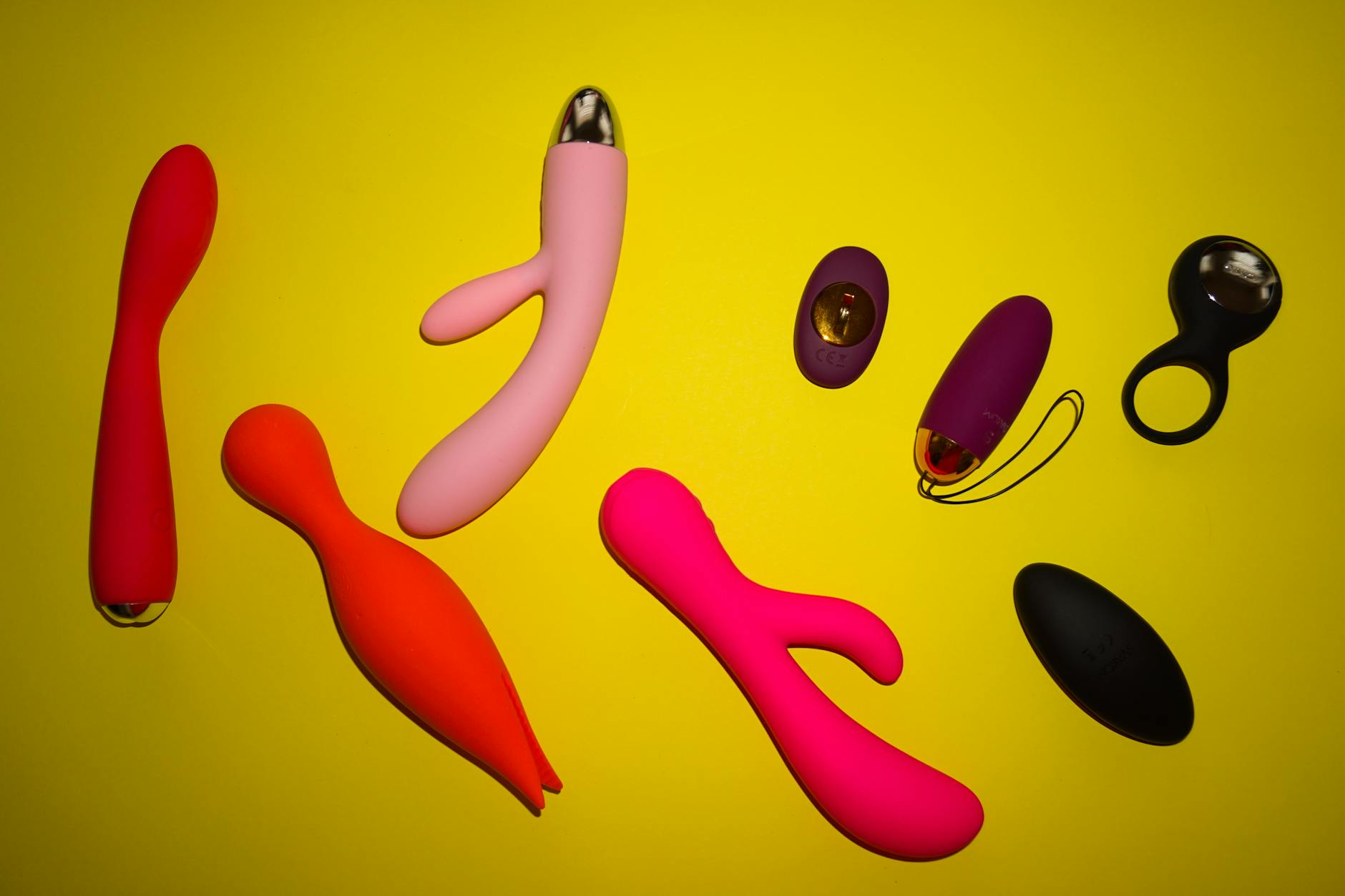
Photo by FounderTips on Pexels
Starting with the lowest setting
This is not optional. Start at pattern 1, the gentlest suction rhythm. Stay there for at least five minutes. Notice what the sensation actually feels like without narrating it, analyzing it, or waiting for something to happen.
Most people with control anxiety are also observers during pleasure. You're watching yourself have pleasure instead of experiencing it. This splits your attention and kills arousal. Starting low forces you to actually notice the sensation rather than mentally fast-forward to some imagined endpoint.
If pattern 1 feels okay, great. Stay there as long as you want. If you want slightly more intensity after five minutes, move to pattern 2. But here's the rule: you should never feel like the vibrator is pushing you somewhere faster than your mind wants to go.
If it does, go back to pattern 1. This isn't failure. This is you listening to your body's actual pace, not some imagined "normal" pace.
Working with the pause
One of the most powerful tools for control anxiety is building in intentional pauses. Use the lemon vibrator for three minutes, then turn it off and just breathe for 30 seconds. Then turn it back on. Repeat.
Why this works: pauses interrupt the nervous system's escalation narrative. Your brain stops thinking "this is building toward something I can't control" and instead experiences "I can turn this on and off anytime." That agency transforms everything.
Pauses also give your clitoris a break from direct stimulation, which can prevent the overstimulation that sometimes happens when anxiety makes you hold tension. They create rhythm without intensity.
During pauses, just notice your body. Notice your breath. Don't try to build back up. Let your nervous system self-regulate between stimulation and rest.
What actually happens when you stay with it
Something shifts after you've done this a few times. Your brain starts to recognize that letting arousal build doesn't mean losing control. Orgasm isn't a cliff you're falling off. It's something your body does, and you're fully present for it, making choices the entire time.
Many people with control anxiety report that the first time they have an orgasm with a lemon vibrator without bracing against it, without trying to manage it, something unlocks. Not just sexually. They realize that letting go in this specific, contained context doesn't destroy them.
That doesn't mean you suddenly love spontaneous sex or wild abandon. It means you understand on a cellular level that pleasure and agency aren't opposites. You can have both.
When to involve a partner
If you're partnered, eventually you might want to bring a lemon vibrator into partnered sex. But do this after you've had solo experiences first. You need to know what your body feels like on its own terms before adding another person's presence, expectations, or anxiety into the mix.
When you do bring a partner in, be explicit about the control piece. "I want to use this on myself while you're inside me" or "I want to control the intensity," not "Could you use this on me." The phrasing matters because it keeps the agency in your hands.
Your partner's job is to follow your lead, match your pace, and understand that if you pause or stop, that's not rejection. It's you taking care of your nervous system. If your partner can't get on board with that, that's data.
FAQs on control anxiety and pleasure
Can you have a "real" orgasm with a vibrator if you're controlling it?
Yes, absolutely. An orgasm is your nervous system's response to stimulation and arousal. The source and method don't change that. Many people with control anxiety actually experience orgasms more easily with a lemon vibrator precisely because they feel safe controlling the pace.
What if the vibration itself triggers anxiety?
Switching to the air-suction mechanism of a lemon clitoral vibrator often helps because suction feels less aggressive than buzzing. But if even that feels too much, slow down further. Use the lowest setting, take longer breaks, or explore for just 10 minutes instead of 15. Anxiety isn't fixed by pushing through it. It's resolved by moving at a pace your nervous system can trust.
Is it normal to feel nothing at first?
Completely normal, especially if you're used to disconnecting from your body during intimacy. Numbness is often how control anxiety presents. You're not broken. Your body is protecting you by not feeling too much. That protection usually softens over time once your nervous system trusts that it's safe to feel.
Should I be having orgasms by a specific time?
No. Performance pressure is literally the thing killing your pleasure. Some people with control anxiety take weeks to feel comfortable enough to reach orgasm. Some never prioritize orgasm at all and find that just feeling arousal without the endpoint goal actually opens things up. Do what your body wants, not what the internet says you should want.
Can I use a lemon vibrator if I have PTSD or past trauma?
Maybe, with care. Control anxiety rooted in trauma requires a different approach than general anxiety. You might benefit from working with a trauma-informed therapist alongside exploring pleasure. A therapist can help you understand your specific nervous system triggers and create a safer pathway. That's not a limitation. That's wisdom.
What if I still can't let go?
Then you might not be someone who needs to let go in the way the culture tells you to. Some people experience fullest pleasure through a different pathway. That's not failure. That's you understanding how your body actually works. Talk to a sex therapist or coach who specializes in anxiety. They can help you untangle whether this is a true barrier to pleasure or just a different shape of pleasure.
Moving forward
Your fear of losing control during pleasure isn't a flaw in your sexuality. It's data about your nervous system. Lemon vibrators, with their precision and your ability to direct the pace, create a way to dialogue with that fear rather than fight it. They let you reclaim pleasure on terms that feel safe. That's not settling. That's the actual definition of empowerment.
If you're ready to explore this, start small. Fifteen minutes. Pattern 1. Pause whenever you need to. Your pleasure isn't going anywhere. It'll wait for you to feel ready.
Have more questions about navigating anxiety and pleasure together? Reach out to us. We're here to help.