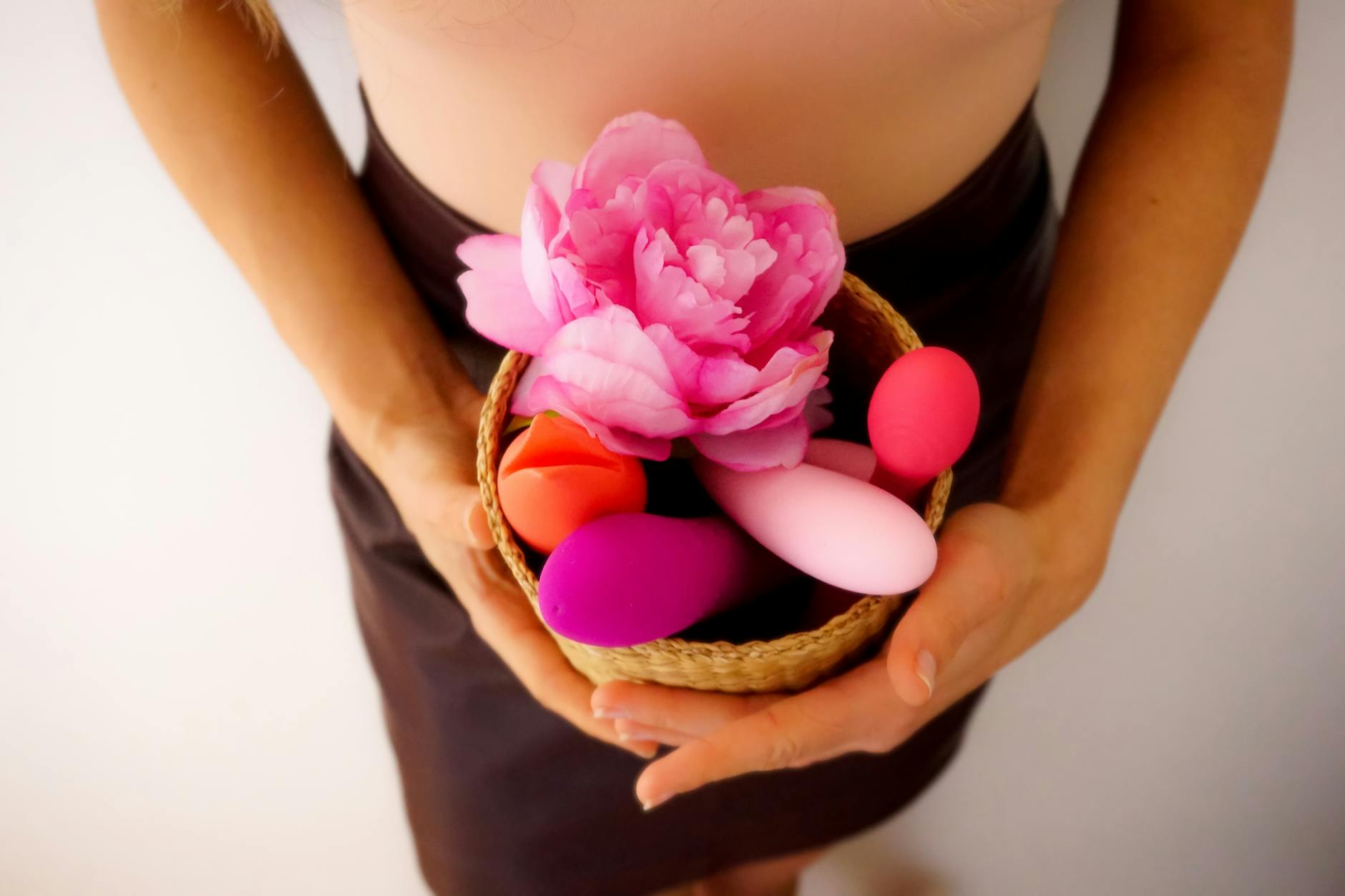
Let's talk about the guilt first
There's this peculiar cultural thing where solo pleasure gets treated differently than partnered sex. One is framed as bonding, connection, growth. The other gets whispered about, hidden, apologized for. I've worked with hundreds of people who feel genuinely ashamed about wanting to explore their own bodies alone.
Here's what I know from two decades of working with couples and individuals: that guilt isn't about desire being wrong. It's about stories we absorbed about what pleasure is supposed to look like.
Where the guilt actually comes from
Three big sources show up repeatedly in my office.
First, there's the older narrative that solo pleasure is a substitute for partnered sex. A consolation prize. Something you do when the real thing isn't available. This framing makes it feel small, less legitimate, like you're settling. You're not. Solo exploration and partnered sex aren't competing events. They're different experiences that can coexist without one diminishing the other.
Second, religious or family messaging about what bodies are for. Sex is for reproduction, or for marriage, or strictly for pleasing a partner. Solo pleasure doesn't fit that box, so it gets tagged as selfish or wrong. The math doesn't check out. Knowing your own body, understanding what feels good, what your nervous system responds to. That's foundational. It's not selfish. It's literacy.
Third, and this one's sneaky: the idea that if you're in a relationship, wanting solo time with your body is somehow a criticism of your partner. As if your desire for self-directed pleasure is a referendum on the partnership. It's not. Your solo sexual time and your partnered sexual time are meeting different needs. Both are valid. Both matter.
Why lemon clitoral vibrators specifically help with this
Let me be direct: there's something about using a lemon vibrator alone that bypasses a lot of the performance pressure that lingers even when you're by yourself.
When we've spent years or decades calibrating our pleasure around someone else's presence, timeline, or preferences, we internalize an observer. Even alone, we're performing. We're rushing. We're optimizing for efficiency instead of actual sensation. A clitoral vibrator like the Lem changes the physical experience in a way that quiets that internal critic.
The suction mechanism works on nerve density rather than friction pressure. This means your body can relax into the sensation instead of tensing up to produce results. You're not working toward anything. You're just receiving. For people drowning in guilt, that shift from production to reception is genuinely liberating. The device does the work. You get to just feel.
Building a new relationship with solo pleasure
If you're coming to this from a place of guilt or shame, here are the things I recommend.
Start by separating solo pleasure from partnered sex in your mind. Write them down if you need to. They're different activities with different purposes. Solo time is about self-knowledge and self-care. Partnered sex is about connection and vulnerability. One doesn't negate the other. One doesn't have to earn its place.
Create actual space and time for this, not as an afterthought, but as something scheduled and protected. This isn't about being rigid. It's about treating your own pleasure as worth planning for. Worth protecting from interruption. The message you send yourself when you do this is that your body matters.
When you're actually using a lemon clitoral vibrator, go slow at first. This is especially important if you've carried shame around pleasure. Start on the lower settings. Let your body remember what it feels like to be touched without urgency. There's no finish line here. No performance metric. Just sensation.
The science piece: what's actually happening
When you stimulate the clitoris, you're activating a neural pathway that releases dopamine and serotonin. Those aren't nice-to-haves. They're mood regulators. They reduce anxiety. They build resilience. Solo pleasure, especially when it's not rushed or guilt-laden, is literally a form of self-care with measurable neurochemical benefits.
The clitoral network extends way beyond what's visible externally. The clitoral bulbs, the vestibular bulbs, the network of nerves. A good clitoral vibrator stimulates multiple zones, which means more of your nervous system gets activated. That's why people often report more intense and full-body sensations with a lemon vibrator compared to other methods.
And here's the part that matters for the guilt piece: your own touch, or the precise stimulation from a device you control, teaches your brain that pleasure is something you can generate. Not something you receive from someone else. Not something conditional on being in a relationship. Something inherent to your own body.
Practical setup for solo exploration
First, location. Pick somewhere you won't be interrupted. Lock the door if that helps you feel safe. Privacy isn't luxurious. It's foundational. You can't relax into sensation if part of your nervous system is on guard duty.
Second, time. Morning, midday, evening. Whenever you have actual mental space. Not squeezed into five minutes between tasks. If you're used to rushing through things, this is a chance to practice slowness.
Third, lubrication. Water-based lube, always. This isn't negotiable. It reduces friction in ways that feel better and keep you safer. It also signals to your brain that you're doing something intentional for yourself.
Fourth, your mindset. If you find yourself rushing or thinking about your to-do list, just notice it. Bring your attention back to sensation. This is practice in being present with your own body. It's a skill.
When shame shows up (it might)
If you're in the middle of solo exploration and guilt surfaces, don't white-knuckle through it. Pause. Notice where you feel it in your body. Is your shoulders tight? Your breath shallow? Slow down. Sometimes people carry so much conditioning that the body gets activated before the conscious mind catches up.
You might need to work through some of this stuff. Talking to a therapist who specializes in sexual health and shame can be genuinely transformative. But the practice itself, regular solo time with your body, is part of the healing. You're rewriting the narrative through lived experience, not just talk.
If you're in a relationship, this doesn't have to be secret. Many couples benefit from partners having solo sexual time. It takes pressure off partnered sex. It gives you access to different types of pleasure. It makes you more resourced and more grounded. That often translates to better intimacy, not worse.
A note on consistency
One of the biggest shifts I see happens when people commit to regular solo exploration, not as a treat or a last resort, but as part of their regular wellness practice. Like exercise. Like sleep. Your nervous system benefits from regular access to pleasure.
This doesn't mean performance or pressure to orgasm. It means showing up consistently, with your body, for yourself. The Lem vibrator makes this easier because it's intentional, it's reliable, and it works with your body rather than against it.
Solo pleasure is not a second-class sexual experience. It's foundational self-knowledge. It's you learning what your body is capable of. It's you experiencing yourself as a source of your own pleasure. That's not selfish. That's sovereignty.
FAQ
Is it normal to feel guilty about solo pleasure?
Completely normal. You've probably absorbed messages your whole life about what pleasure is supposed to look like, who it's supposed to involve, and when it's acceptable. Those messages don't disappear overnight. But normal doesn't mean you have to stay there. Guilt is often a sign that you're bumping up against internalized rules that don't actually serve you.
Can using a lemon clitoral vibrator solo affect my desire for partnered sex?
No. If anything, the opposite. When you know your body and understand what you respond to, you can communicate that to a partner. You can show them. The skill of self-pleasure translates to better partnered experiences because you're less dependent on someone else to generate your pleasure. That's actually more erotic, not less.
How often should I explore solo?
Whatever feels right for your body and life. Some people benefit from weekly. Others prefer a few times a month. There's no prescription. The point is regularity enough that it becomes part of your life, not a special occasion.
What if I'm worried my partner will judge me?
That's worth having a conversation about. If a partner judges you for wanting to know your own body, that's worth examining. In healthy relationships, solo sexual time is understood as self-care. If that's not the case in your relationship, that might be a sign of something deeper to work through, possibly with a couples therapist.
Does a lemon vibrator work differently than other toys for solo exploration?
Yes. The suction mechanism creates a different sensation than vibration alone. It's less about friction and pressure, more about gentle stimulation that activates deep nerve pathways. That can make it easier to relax into sensation, which matters if you're working through guilt or shame. You're not pushing for results. The device is doing the work, and you're just experiencing it.
What if I orgasm quickly or not at all when I use a clitoral vibrator solo?
Both are completely fine. Orgasm isn't the goal. Sensation is. Pleasure is. Some people find that when they take the pressure off outcomes, they actually experience more. Others find that solo time without orgasm is deeply satisfying. Your body doesn't owe you a specific result.
The bottom line
Solo pleasure with a lemon clitoral vibrator isn't a consolation prize. It's not selfish. It's not a sign that something's wrong with your relationship or your body. It's you exercising your own agency and building a more grounded relationship with desire.
Start where you are. Let go of what you think it should look like. Give your body permission to feel good without performing for anyone, including yourself. That's where the real change begins.